Crazy Bars
My minimum standards for handlebars are as follows:
- Made of metal, cant believe you people are trusting your teeth with those carbon bars
- Comfy/ergonomic, obviously
- Made with normal part standards in mind
Luckily for me, that’s like 99% of handlebars out there, which bodes VERY WELL for the longevity of these parts. So well that longevity is barely going to be part of this review, even though that topic is what almost everything on this website is centered on. With that in mind, lets talk bars.
For the last 3 years, I have been rocking H-Bars. They are weird looking, take a bit to get used to, bulky, and in my opinion they are the best handlebars ever designed. H-Bars were released by Jones Bicycles in 2002, and have gained quite the cult following of which I am a part of.
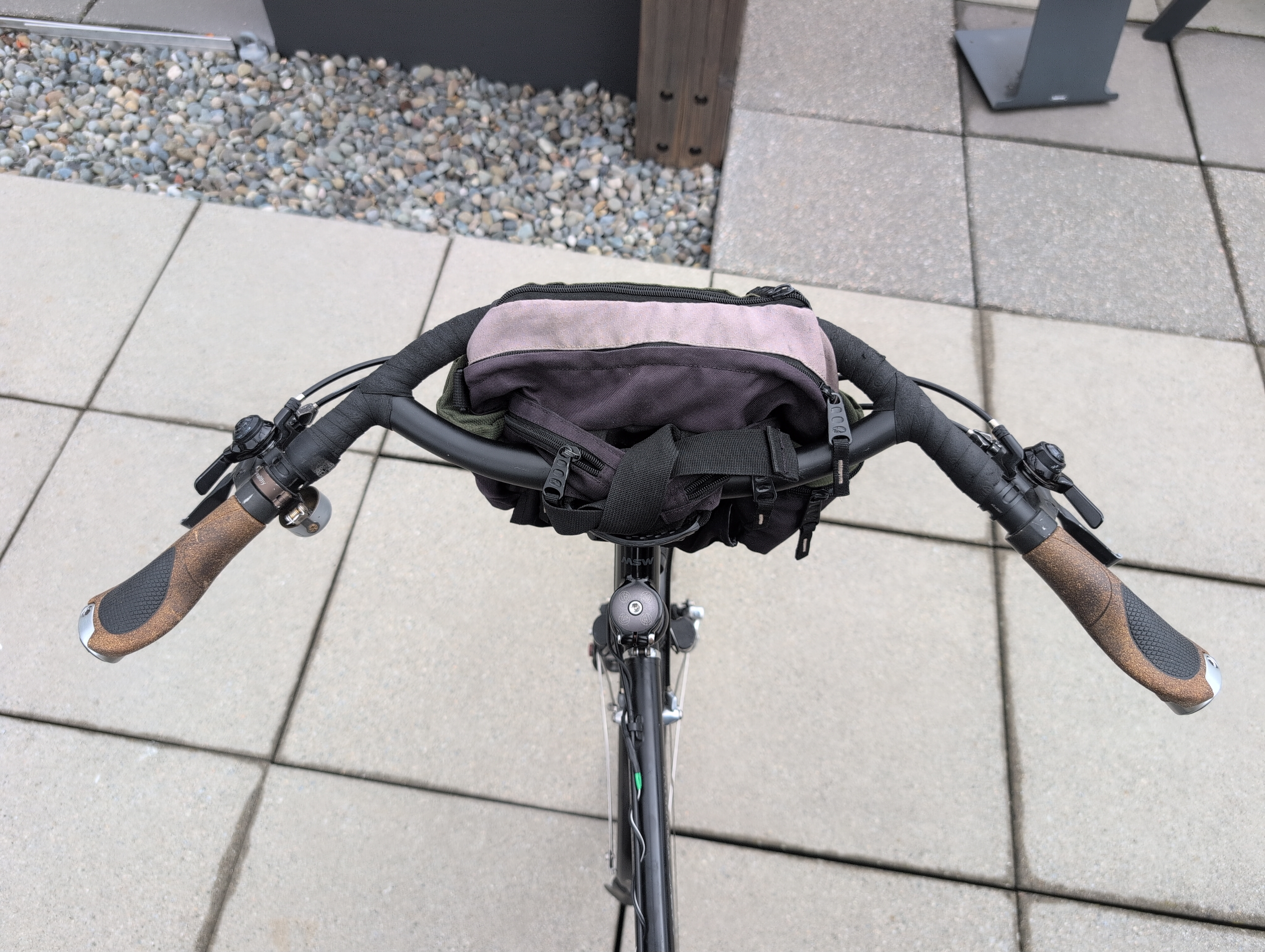
Like all alt-bars, the genius of the H-Bar comes from it’s many hand positions. You can put your hands in three different positions on the loops as well as out on the regular grips where the controls are. Having multiple hand positions is ESSENTIAL for longer rides, and is one of the main reasons people still use drop bars. No matter how comfy your grips/gloves are, human hands did not evolve to me stuck in one position for so long!
But, like I said, all alt bars have different hand positions. What makes the H-Bar so special? For me, it’s the space efficiency. The H-Bar can be used as a regular handlebar, a touring handlebar, a mountain bike bar or cruiser style bar. You can even put a weird looking stick on the end of it (they call it the narwal, looks like…something else to me) to turn it into an honest to god aerobar. The extra loop makes securing luggage with straps a breeze, and as a guy with wide shoulders, I love how wide these bad boys are (although you can always saw them shorter).
That sounds versatile, sure, but I said “efficient”. Why? Well, these bars can do it all while not increasing the bikes footprint all the much. There is a clear use-case for almost every inch of the bar. And the smooth curves mean that I’m not poking peoples eyes out on the train. It is comfy, versatile, relatively compact, and unassuming. At first glance, the design seems simple, but in practice, feels extremely well thought out.
A couple of months ago, I found a used Long Haul Trucker in my size that I snatched up without hesitation. When I was planning what I would do to build up the frame, my first thought was, of course, lets through another H-Bar on there. But I wanted this thing to be built up with silver components, and I was having a hard time finding a good deal on silver H-Bars anywhere. So I decided to the Velo Orange Crazy Bars instead, and let me tell you, these are the opposite of “unassuming”:
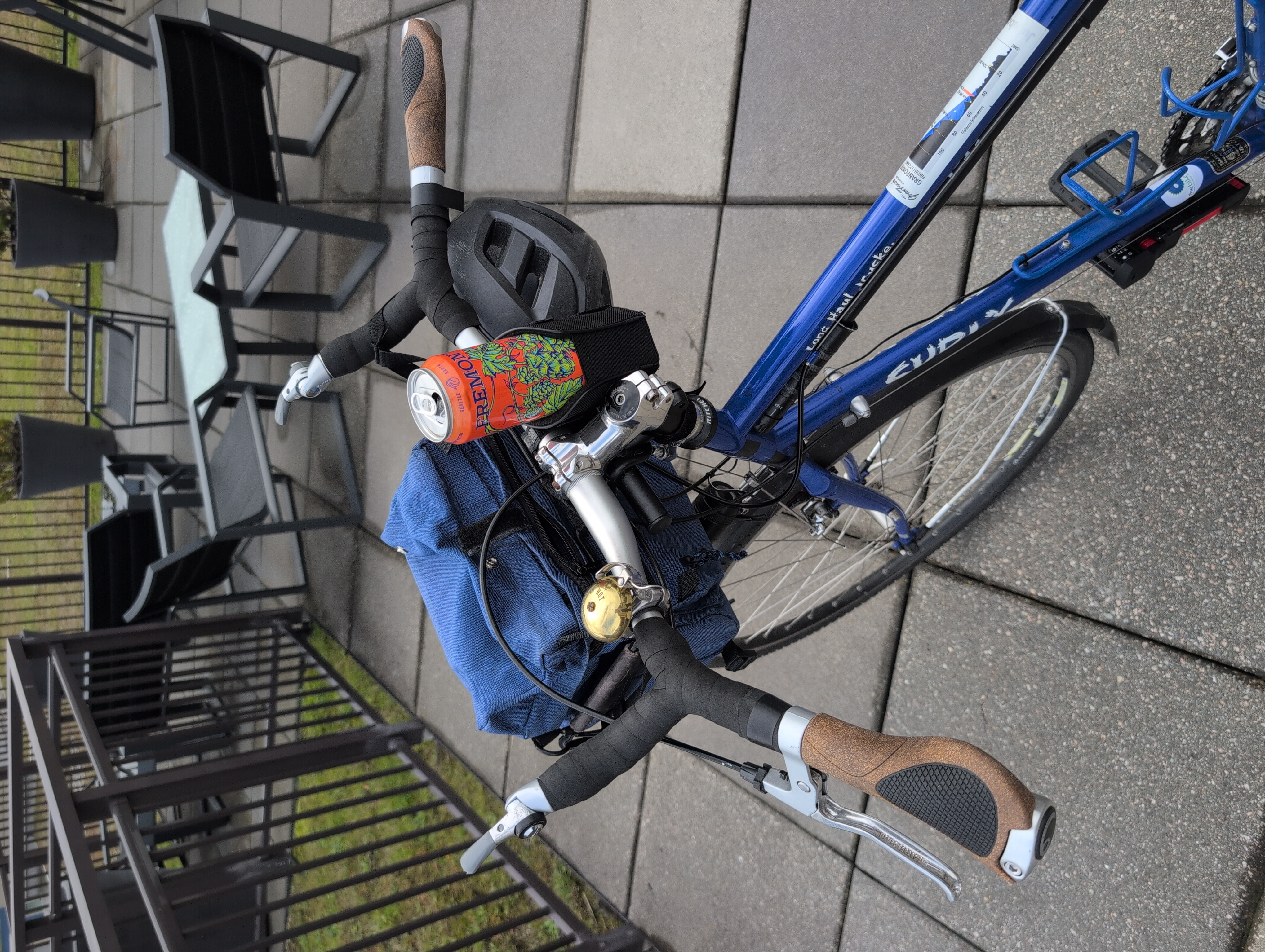
My H-Bars only get comments from the “if you know, you know” crowd. These guys on the other hand have people thinking my LHT has antlers growing out of it (which is what I now call them). Remember how I said that H-Bars were relatively compact? When my bike is hanging from the hooks on the train, people are giving me nasty looks as they duck under my shifters to avoid getting poked in the eye. I even have a hard time getting these handlebars though most door frames. They are 780mm wide. RIDICULOUS.
But do I like them? Well, I wouldn’t say that, but I do love them.
They offer some great hand positions. The 35 degree sweep feels just right. The antlers act as hoods on drop bars just are way easier to grip than brake hoods (at least for me, I have huge hands). In fact, the tubing on the antlers is to the same spec as drop bars, so you can use any drop bar compatible parts, while the rest of the bar is made to normal flat bar specifications. Essentially, everything fits where you think it should, which is great and makes a bunch of weird things possible. My favorite is the shifter placement as pictured above, which is absolutely ideal (subjectively). Having the brakes in the widest position forces you to get upright and in control when you are slowing down, which is the position you should be in. Something that bugs me on my H-Bars is that I like to climb with my hands on one of the forward hand positions, but climbing often needs closer attention to gear choice than other parts of riding, and its frustrating to have to let go for a sec to change my gears in the middle of a steep climb. With bar end shifters at the ends of the antlers, I get the best of both worlds. A nice forward “power” position, but with easy access to fine tuning my gearing at the same time.
This setup is actually the opposite of typical drop-bars, if you think about it. Brifters (or paddle shifters, or whatever you call the indexed drop-bar shifter-brake-level combo things) brake best from the drops, but shift best from the hoods. This is the exact opposite of what you want. Just another reason I don’t love drop-bars.
However, I was worried that the shifter placement would be too far from the brakes, but actually I find it to be not a big deal at all. Unlike down-tube shifters, or even regular bar-end shifters on drop bars, you don’t have to lean down super far just to change gears, making it much easier to feel confident when you have to shift gears quickly. Plus, the gears are easy to look at without taking your eyes off the road, since they are basically in the same part of your field of view anyway.
Another unexpected but interesting advantage they have over H-Bars is that Crazy Bars don’t need crazy (haha) attachments to use them. By that, I mean that since they don’t have that second bar wrapping around the front of the bar, they can take advantage of normal bar bags, light placements, etc. Being less efficient with their layout does actually give them more real estate for adding random stuff to them. As you can see in the photo I have at the top, attaching stuff to H-Bars isn’t hard, but you aren’t going to be able to use that dope randonneuring bag you have. Not easily anyway. So, in a way, Crazy Bars end up feeling a lot more like normal bars than H-Bars do, which need a bit of the box thinking to get the most out of.
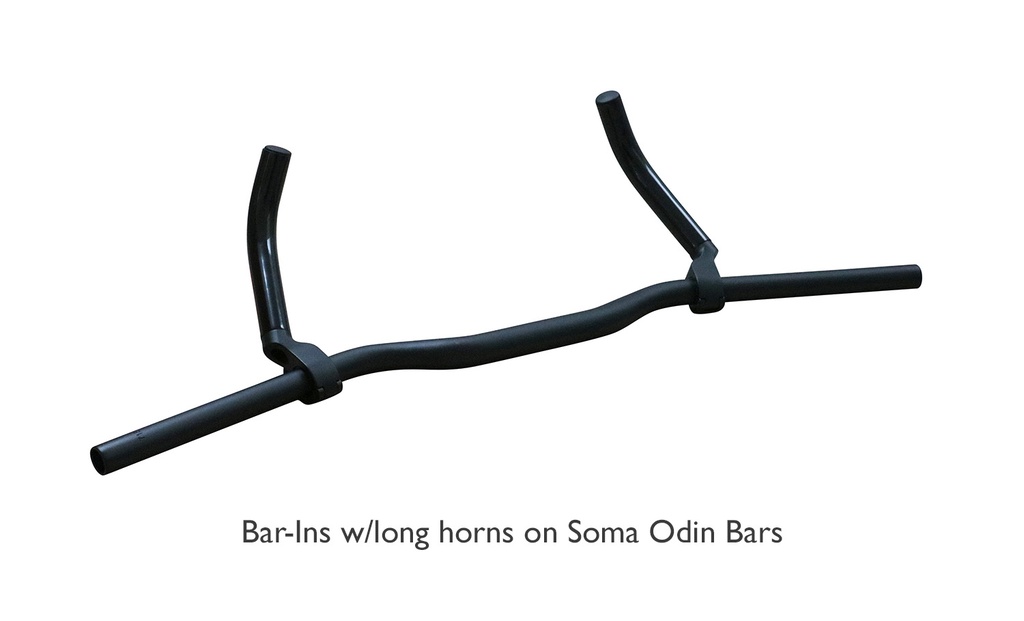
I’ve seen a lot of people say that Crazy Bars are cool but you could just get normal bars and put “bar-in” attachments (like those pictures above) on to get the same result with more modularity. I’m all for modularity, but I have some concerns.
- No clamp is going to be as strong as a weld. If one of these slips, I’m going to have to unwrap the whole thing just to re-tighten the bolt and that sucks.
- Wrapping these things in the first place doesn’t seem…easy. At the very least, I cant see a way to wrap these that would allow for a comfy place to rest my hands in the junction where the horns meet the bar, and I like that position on the Crazy Bars.
- Depending on the “bar-ins” you get, this can cost quite a bit more than the crazy bars. The Velo Orange Seine Bars are essentially the Crazy Bars without the horns. If you pick up the Seine plus the Soma Bar-ins (the ones pictured above), that will cost you $163 vs the $120 that the Crazy Bars cost.
However, I will say that the bar ins would also allow you to angle the horns about 5 degrees inward, which I think would make a small improvement to the Crazy Bars. The Koga Denham Bars have an inward sweep, but they are really hard to find in the US right now so I never got to try those out (and they don’t come in silver!!)
As I said, I more love them than like them. Infatuated, really. As in, I’m completely willing to overlook their faults because they just look and feel so great. They are not optimal. They are CERTAINLY not for everyone. I am running into shit all the time with the horns. No one else is willing to ride my LHT (which i snagged as a “backup” bike. yes, im delusional) because the shifting is so unusual. Hell, I have a hard time getting my bike to fit on a crowded bike rack sometimes because of them. Oh and they look super weird.
But they are rad, they are crazy, and I’m in love with them.